
MFA Lists
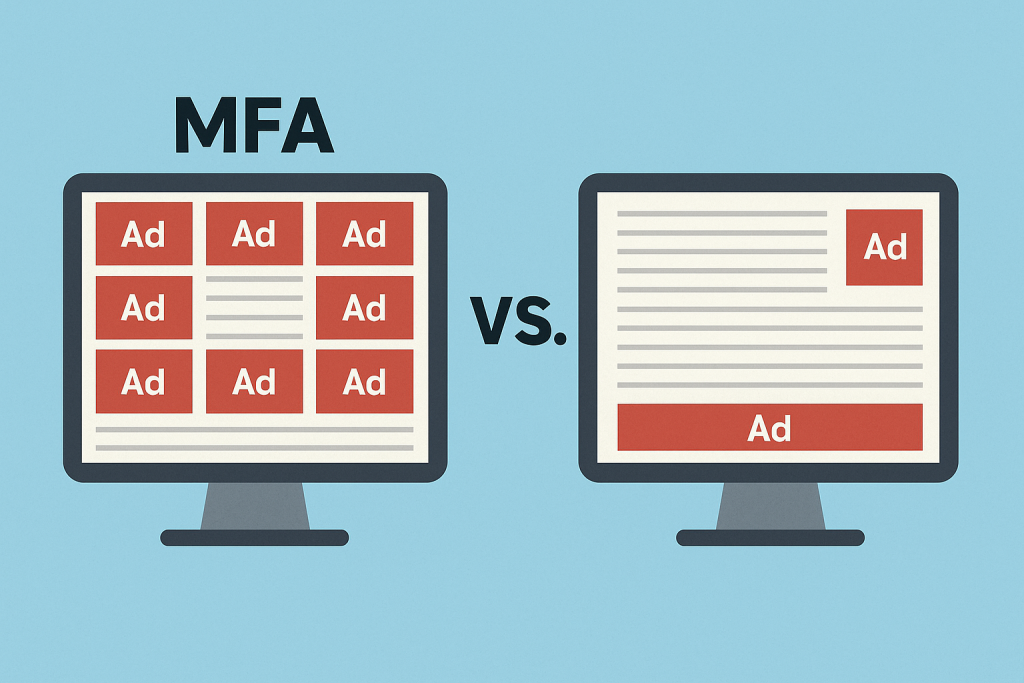
The last few months have been challenging for online publishers. The recent expansion of MFA blocklists has resulted in a decline in ad revenue for the domains identified on these lists, causing major alarm among publishers. So, what is this industry shake-up all about? And how can you prevent your domain from being categorized as MFA?
Made For Advertising (MFA) websites are exclusively designed for ad arbitrage, with minimal emphasis on content quality and user experience. They use tactics such as layering ads to increase publisher revenue. The latest surge of sites making their way onto MFA lists might also be due in part to Google’s recent search algorithm update that aims to eliminate unoriginal, spammy sites from their results page. If advertisers had mixed feelings about buying MFA in the past, there’s even less motivation now that these sites may not show up on a search results page. For years, advertisers and DSPs have employed various methods to identify and avoid unwanted traffic, and are currently using companies like DoubleVerify, Pixalate, and Jounce Media (and their MFA lists), to help advertisers find brand-safe sites that don’t, for example, layer ads or use click-bait tactics.
Some say that recent MFA blocklists went further than intended, and many quality sites were unintentionally swept up in this massive clean-up effort. Advertising associations (IAB, 4As, etc.) are now in monthly talks to clarify what exactly is MFA once and for all. While a variety of metrics have been used to classify MFA (high ad-to-content ratio, generic content, high bounce rate), the focus now is mostly on arbitrage. If a website pays for a large amount of its traffic, it informs the buyer that they likely prioritize buying and selling traffic over creating unique and engaging content. No surprise, a jumpy user who lands on an ad-cluttered page generally doesn’t convert or perform well for advertisers.
So the real question is, can a publisher earn ad revenue if they are labeled MFA? The evolving answer is: possibly, but the future does not look bright. Some of our demand partners have sworn off MFA altogether. Others still monetize it, but label it so that buyers can decide for themselves. MFA sites flew under the radar for years, but marketers now find that MFA sites don’t add any real value to their campaigns. The Brand Safety Institute’s Publisher Council aims to build a portal so that publishers can see if they are on an MFA list and why. Read more…
Best practices to avoid landing on an MFA list:
- Focus on search visibility over paid traffic
- Adhere to the 30% max ad density ratio
- Remove ad layering
One thing is clear: ad-tech is heading in the direction of quality at a quicker pace than ever before. A short-term sacrifice for a long-term gain is an apt mantra for 2024. Even small, incremental changes, like removing one ad unit, will help publishers steer clear of MFA lists. Although the initial revenue drop will hurt, the remaining ad units’ rates will eventually increase because of improved visibility. We are committed to keeping pace with evolving digital advertising standards and regulations, and we encourage you to join us in this effort so that we can all continue to thrive together into the future.
For more MFA information, click here.
Visit our website to find out how we can maximize your website’s revenue potential and guide you through these many advertising best practices.